Body as Border
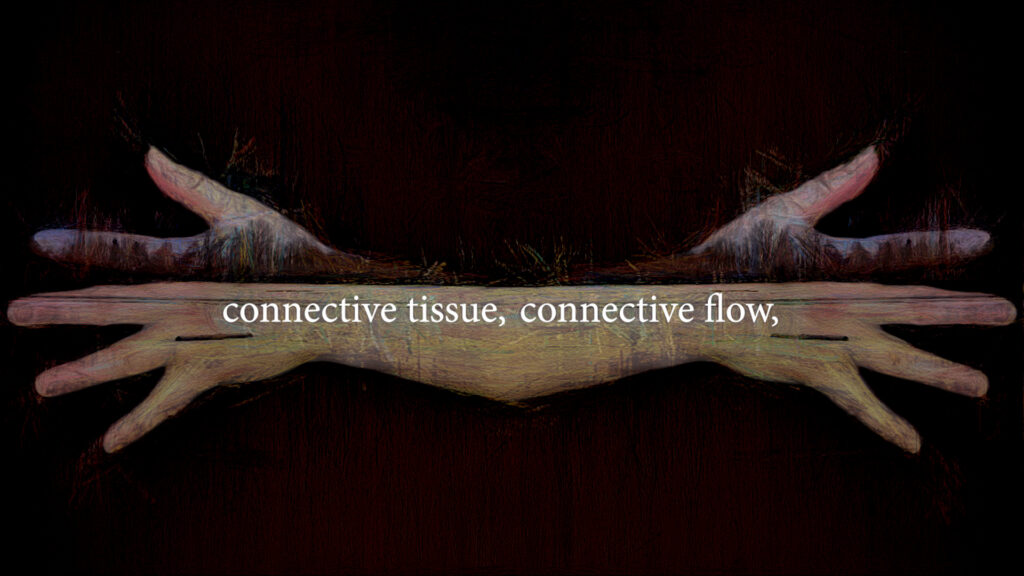
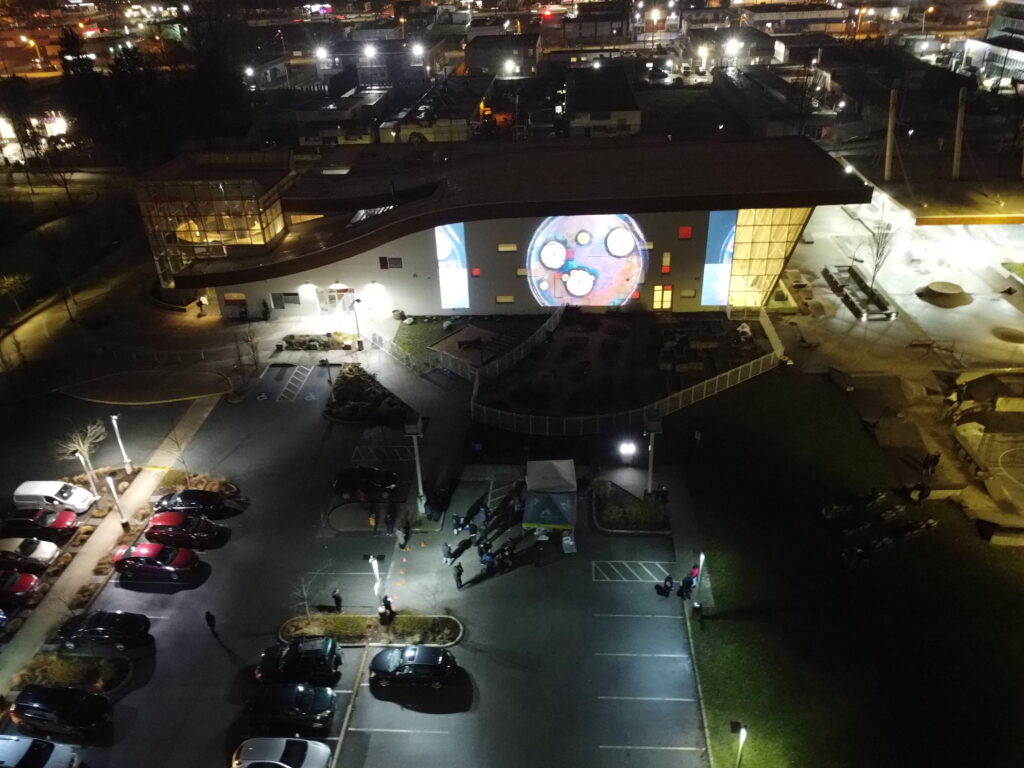
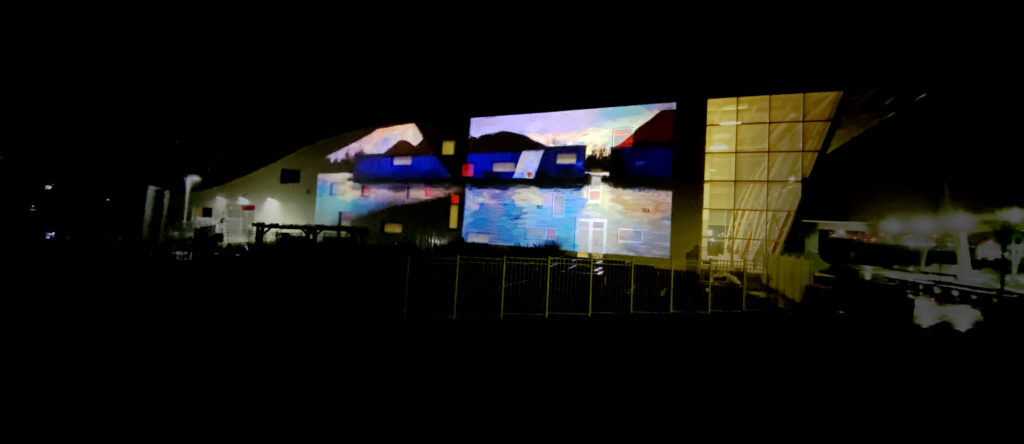
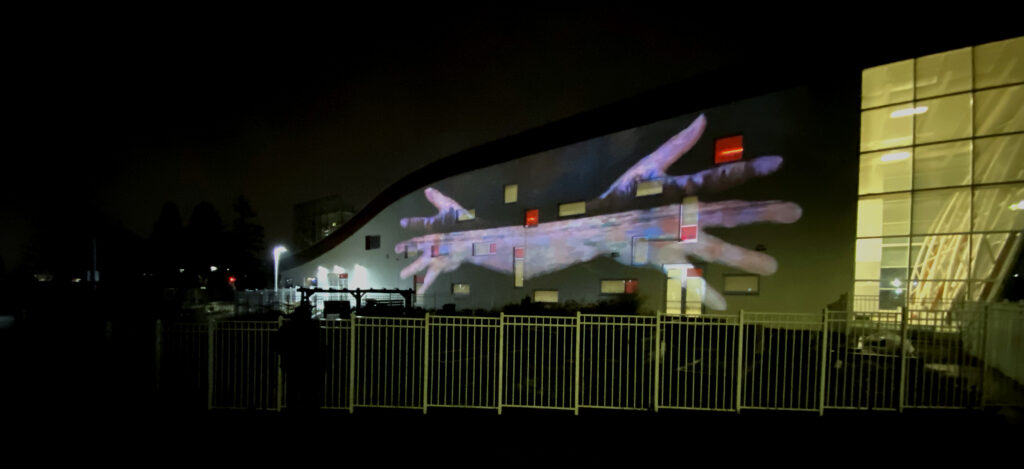
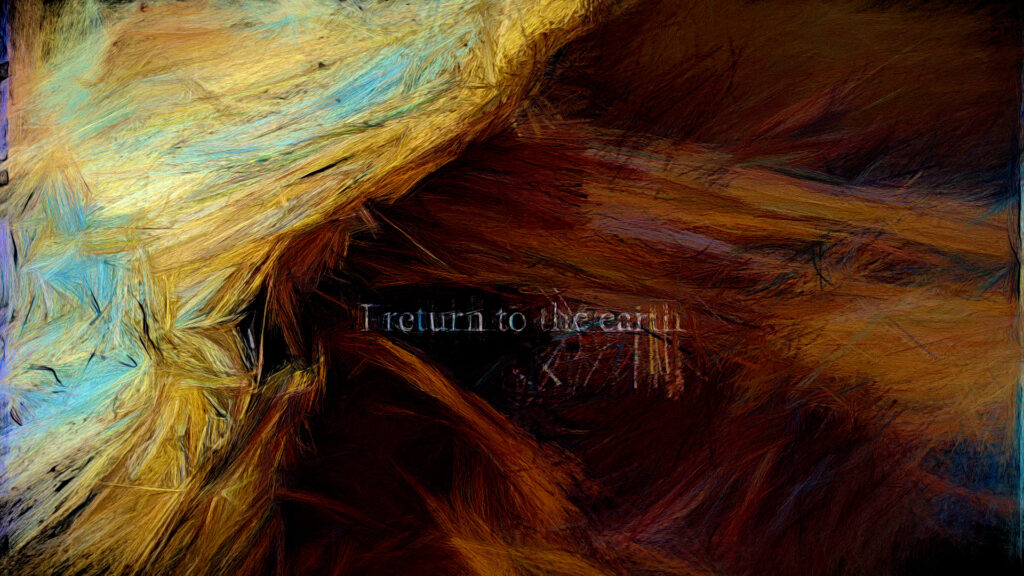
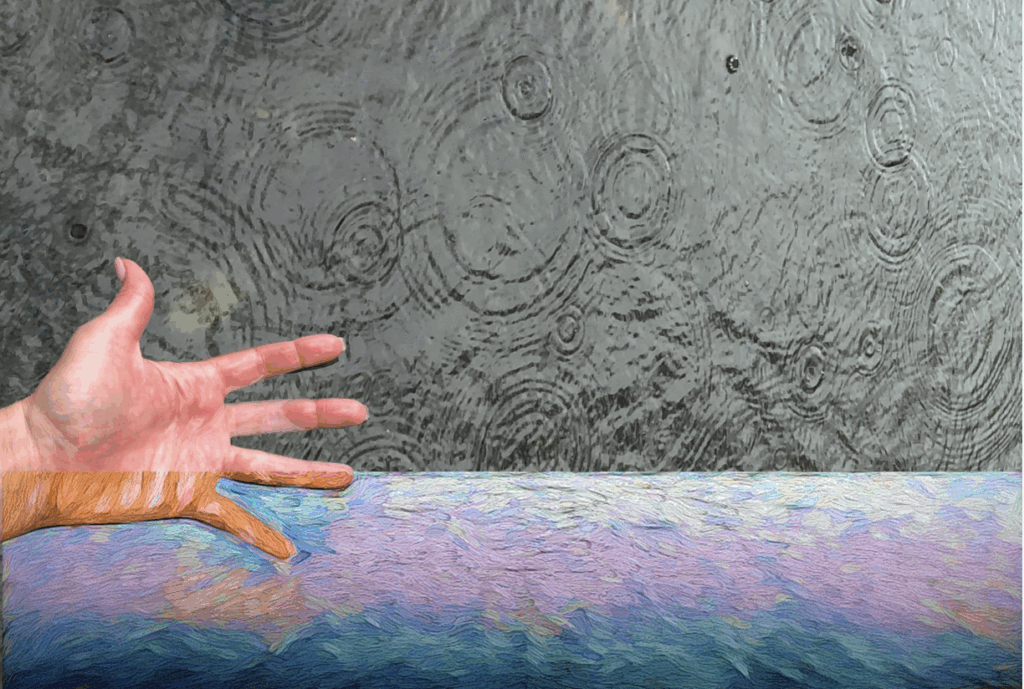
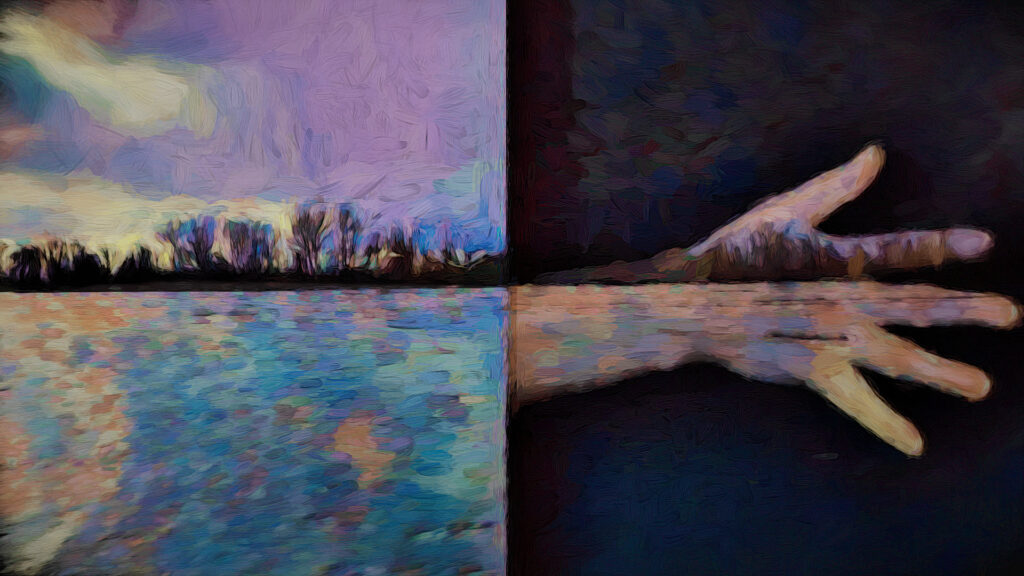
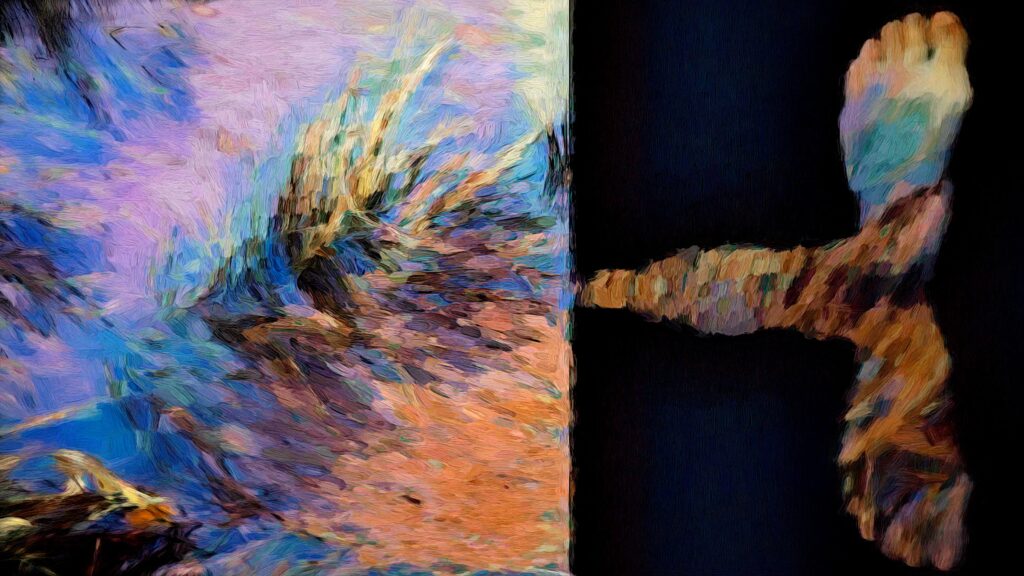
Body as Border: Traces and Flows of Connection (2023) is a 32 minute immersive, large-scale generative video projection created for the Urban Screen at Surrey Art Gallery.
Much as borders represent the ways that state powers assert control and sovereignty over territories by defining the relations between ‘us and them,’ so too the human body, in the context of the pandemic, has become an object of state and bio-capitalist interest – and fear and division has resulted as a consequence. Within this context, the connections between the macrocosm of global politics and the smallest of all microbes, the virus, are played out in the borderland of the human body, which becomes both a statistic and a borderland space for the meeting of macro and micro. The artwork was created over 3 months with reference to some of the histories of Surrey, situated on the Fraser River and adjacent to New Westminster, one of the first sites that British settlers colonized in the mid-1800s.
Using the water of the Fraser River as both a physical and metaphorical substance of connection between these local histories and our current global crisis, we tease out connections between the movements of those early settlers and our histories of migration to the region which are entangled and complicit with colonial and settler histories.
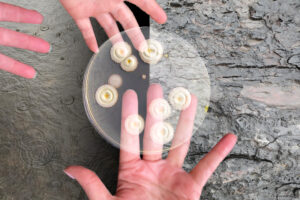
We also reflect on the ways in which the covid-19 virus has colonized countless human bodies across the globe. Much like the pandemic reminds us that we are all connected, the water that we draw attention to acts as an agential carrier; part of the perpetual recycling of a system that sustains us all, carrying memories of the human and non-human bodies that it has traveled through. The project includes visual and sound sources from the Fraser River, along with bacteria grown in petri dishes from the rivers water, mixed with images and videos from personal archives and poetic stanzas as a response to the borders we’ve encountered, broken through or created as we migrated to this region as uninvited guests.
Body as Border is part of our ongoing collaborative exploration that speculates about possible futures where algorithms demarcate the boundaries between the biological and the digital. As artificial intelligence (AI) shapes every aspect of modern human life and algorithms can no longer be considered separate from the technologies that uphold their present global, political, and cultural systems, we highlight the agential interplay between the computational and the biological. Informed by media archeology (Huhtamo and Parikka 2011), we take a feminist materialist approach (Ahmed, 2010; de la Bellasca, 2018; Mondloch, 2018; Braidotti, 2011; Haraway 1988) to explore the porous boundaries between humans and non-humans through custom-built AI tools, performance, soundscores, bio-art, and video.
This project builds on the methodology and tools used on a recent project entitled Mitochondrial Echoes (2021) in which we employ AI-built poetic stanzas, sonic decay, and narrative iteration to explore the female body as a multispecies animal in relation to machine-learning processes and how acts of care can facilitate kinship. In Bodies as Borders we employ DiPaola’s custom-built generative tools to create images with different levels of abstraction and styles. These images are generated by systems that learn from existing digital images and/or to texts.
AI painting and poetry Steve DiPaola
video editing Gabriela Aceves Sepúlveda
soundscore Freya Zinovieff and prOphecy Sun
performance Gabriela Aceves Sepúlveda, Freya Zinovieff and prOphecy Sun
camera, photography Gabriela Aceves Sepúlveda, Freya Zinovieff, prOphecy Sun and Getty Images, drone and video footage, Reese Muntean and Jay Tseng